Having a criminal record can feel like a heavy weight, like a shadow following you around, making simple things like getting a job or finding a place to live incredibly tough. Over 70 million Americans – nearly one in three adults – have some form of criminal record, according to the American Progress organization. It’s easy to feel stuck, like your past mistakes define your future. But what if I told you there’s often a way to move past that? What if you could actually clear that criminal record and truly get a second chance? That’s exactly what this article is about. Drawing on years of helping people navigate this complex process, I want to guide you through the steps involved in tackling your criminal history, explaining how expungement or sealing might be within reach, and giving you the expert insights you need to move forward. My goal here is to empower you and show you that reclaiming your future is absolutely possible.
Understanding the Basics: What “Clearing” Really Means
Let’s get one thing straight right off the bat: “clearing” your criminal record isn’t like hitting a magic delete button. It means different things depending on where you are and the specifics of your case. You’ll often hear terms like “expungement,” “sealing a record,” “set aside conviction,” or “vacate judgment.” While they all aim to limit access to your record, they work in slightly different ways.
Think of expungement or sealing a record as essentially making your criminal history invisible to most people, like potential employers, landlords, or educational institutions, especially when they run a standard background check. However, it’s crucial to understand that the exact terminology and the specific procedures involved vary hugely from state to state. What’s possible in one state might be completely different in another, due to their specific state laws criminal records. This is something I see constantly in my work; there’s no one-size-fits-all answer when it comes to criminal record types and how they can be addressed.
Is Your Record Eligible? Key Factors I Evaluate
This is often the first big question people have: “Can my record be cleared?” It’s a crucial step, and based on my experience, several key factors come into play when evaluating if you’re eligible for expungement or sealing.
Offense Type and Severity
The kind of crime on your record is a major factor. Generally, less serious offenses, like certain misdemeanors, are more likely to be eligible for expungement or sealing than felonies. However, it’s not always that simple. Some states have specific lists of ineligible offenses, often including serious violent crimes, sex offenses, or crimes involving vulnerable populations. There are also often specific state carve-outs or exceptions that can make even a seemingly minor crime ineligible. For instance, I’ve seen cases where a specific misdemeanor wasn’t eligible due to a particular state law, while a different, seemingly more serious misdemeanor in another state was eligible. Understanding these nuances, based on the crime type and whether it’s felony expungement or misdemeanor expungement you’re looking into, is something I constantly navigate.
Time Elapsed Since Offense or Completion of Sentence
Another critical piece of the puzzle is how much time has passed since the incident or, more commonly, since you completed your sentence, including any probation or parole. Most states have mandatory waiting period expungement requirements. This could be five years, ten years, or even longer, depending on the state and the severity of the offense. How long to expunge record really depends on these specific time limits. I’ve worked with clients who were just shy of meeting a waiting period, and we had to wait patiently until that specific date arrived to file. On the flip side, I’ve had cases where someone met the requirement right on time, which allowed us to move forward quickly. These criminal record time limits are non-negotiable and a primary factor I assess upfront.
Your Criminal History (Lack of Recidivism)
Beyond the specific eligible offense, courts generally want to see that you’ve stayed out of trouble since then. Having a clean record expungement is usually a fundamental requirement. This means no new arrests or convictions since the one you’re trying to clear. It’s seen as proof of rehabilitation criteria – a demonstration that you’ve learned from your past and are now living a law-abiding life. Courts often look favorably on individuals who show they’ve made positive changes and have no new arrests on their record. It’s a clear indicator of your commitment to a better future, and it’s a key factor I highlight when presenting a case.
Navigating the Process: Steps I Guide Clients Through
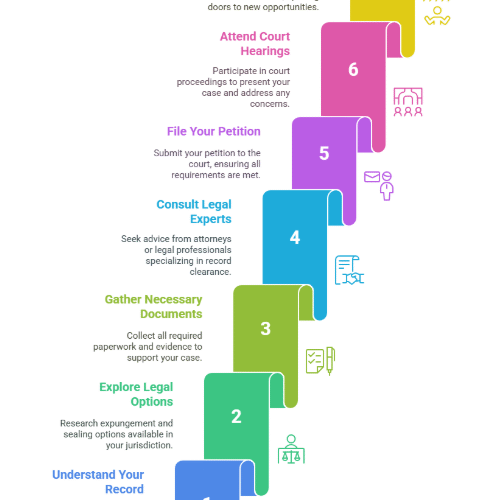
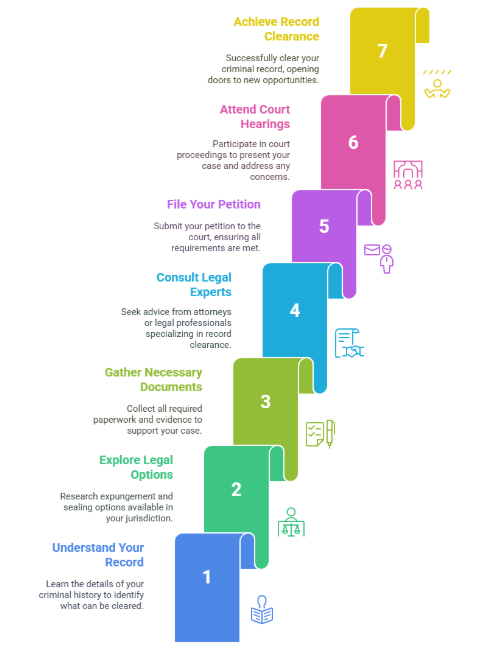
So, you think your record might be eligible. What comes next? The process of actually getting your record cleared involves several distinct steps, and these are the stages I typically guide my clients through.
Researching Eligibility in Your State
This is the absolutely crucial first step, and it’s something I always emphasize. You must research the specific state expungement laws where the crime occurred. Laws vary so much, and what’s possible in California might be impossible in Texas, and vice-versa. My starting point for any case is always digging into the specific eligibility by state. Looking at state government websites or reliable legal resources is essential to find criminal record laws applicable to your situation.
Gathering Necessary Documentation
Once we know the laws, the next step is pulling together all the required paperwork. This usually involves getting copies of court records related to the offense, arrest records from the police department, and proof of sentence completion, like documentation showing you finished probation or paid all your fines. Obtaining court records and getting an arrest record copy can sometimes be a bit of a process, but having all the necessary criminal record documents in order is absolutely vital for filing a strong petition. I’ve had cases where finding a specific document was the missing piece that allowed us to move forward successfully.
Filing the Petition or Motion
With all the documents in hand, the formal process begins by filing the expungement petition or motion with the correct court. This is the official request to the judge to clear your record. There are specific criminal record court forms that need to be filled out accurately, and often, there are court fees expungement associated with filing. This step is the formal “start” of the legal process, and ensuring everything is filed correctly is where having a firm understanding of the procedures, something I manage for my clients, is incredibly helpful.
Notification and Potential Objections
After you file, the court typically notifies certain parties about your request. This almost always includes the prosecutor’s office that handled your original case. These parties may have the opportunity to file expungement objections if they believe there’s a reason your record shouldn’t be cleared. Receiving a prosecutor objection can feel intimidating, but it’s a standard part of the process. I’ve dealt with numerous objections over the years, and understanding how to address them, sometimes through negotiation or preparing for a hearing, is key to navigating this stage. Getting the required notice of expungement petition out correctly is also a critical procedural step.
The Court Hearing (If Required)
Not every case goes to a court hearing, but it is a possibility. If there’s an objection, or if the judge wants more information, you might be required to appear before a judge. At an expungement court hearing, the judge will review your case, consider any arguments from the prosecution or other parties, and ultimately make a judge decision expungement. My role often involves preparing clients for this court appearance criminal record or representing them directly, presenting the best possible case for why your record should be cleared.
The Order and Record Updates
If the judge grants your request, they will issue an expungement court order or a sealing order. This is the official directive. However, getting the order is just one part of it. This order is supposed to instruct various agencies – like the police department, the courts themselves, and even the FBI – to update criminal record or restrict access to it. My personal insight here is that this doesn’t always happen automatically or quickly. It’s incredibly important to follow up and ensure that these agencies actually comply with the order and properly handle the record dissemination. I’ve definitely seen cases where, months after the order was granted, the record still showed up on certain checks because an agency hadn’t updated their files properly.
What About Incorrect Information? Disputing Your Record
It’s really important to understand that clearing a conviction through expungement or sealing is different from dealing with incorrect information that might show up on a background check report. Sometimes, the issue isn’t that you can’t clear a valid conviction, but that the report itself is wrong!
If your background check report contains inaccuracies, like showing a conviction you don’t have, listing the wrong crime, or showing an arrest that never led to a conviction (which should ideally not show up on most employment checks anyway), you have rights under federal law, specifically the Fair Credit Reporting Act (FCRA). This law gives you the ability to dispute criminal record errors.
The process for disputing your record typically involves identifying the inaccurate background check, gathering any evidence you have that shows the information is wrong, and then filing a formal dispute with the background check company.